Stanford's 37,000 AI Agents Just Proved Biotech's Future
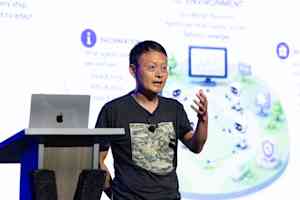
For years, the tech world has been obsessed with building the single, smarter AI agent. But at VB Transform 2026, James Zou, a professor at Stanford, dropped a bombshell: the future isn't one super-agent—it's 37,000 of them working in concert. Stanford has essentially created a virtual biotech company powered by a swarm of AI agents, and the results are staggering. One of its drug designs was independently validated by Merck, a pharma giant. This isn't just a lab experiment; it's a blueprint for how AI will transform entire industries. For developers and product builders, the takeaway is clear: the era of 'one engineer, one agent' is ending. The real challenge—and opportunity—lies in orchestrating thousands of agents to solve complex problems, from drug discovery to supply chain optimization. This story isn't about AI hype; it's about a paradigm shift in how we build and deploy intelligent systems.
The End of the Single-Agent Era
The prevailing assumption in AI development has been that a human directs one AI agent, like Claude Code or Copilot. But Stanford's virtual biotech shatters that model. By deploying 37,000 agents, each with specialized roles, they've created a system where the whole is exponentially greater than the sum of its parts. This isn't just about scale; it's about emergent collaboration. Agents are designing experiments, analyzing data, and even critiquing each other's work. The result? A drug design that Merck independently confirmed—a validation that this approach isn't just theoretical. For developers, this means shifting focus from building a single brilliant model to designing ecosystems where many models can interact, share information, and iterate. The tools and frameworks for this kind of orchestration are still nascent, but the potential is immense. The question is no longer 'Can AI do this?' but 'How many agents does it take to do it better than humans?'
Orchestration: The New Core Competency
Zou's presentation wasn't just about the impressive number of agents; it was about the architecture that makes them work. The team had to connect legacy databases, design APIs for agent-to-agent communication, and create a 'constitution' of rules to prevent chaos. This is the blueprint for any organization looking to implement massive AI systems. The key insight is that orchestration—managing the flow of information and tasks among thousands of agents—is the new core competency. It's not about writing code for each agent; it's about designing the environment where they can thrive. This involves everything from data pipelines to error handling to security protocols. For product builders, this means thinking about AI as a team member, not just a tool. The companies that master orchestration will have a massive competitive advantage, because they can tackle problems at a scale and speed that traditional methods can't match.
Beyond Biotech: Implications for Every Industry
While the Stanford example is in biotech, the implications are universal. Think about logistics: thousands of agents coordinating supply chains in real-time, predicting disruptions, and rerouting shipments. Or finance: agents analyzing market data, executing trades, and managing risk across thousands of portfolios. Or even software development itself: agents writing code, reviewing it, and deploying it in a continuous loop. The 'virtual biotech' is just the first proof point. The real revolution will come when this orchestration paradigm is applied to every domain. For developers, this means learning new skills: how to design agent ecosystems, how to handle failure at scale, and how to ensure safety and alignment when thousands of autonomous entities are making decisions. The future isn't about AI replacing humans; it's about AI teams working alongside human teams, multiplying our capabilities.
Key Takeaways
- Massive AI agent swarms (37,000+) can outperform single agents on complex tasks like drug design.
- Orchestration is the new core competency: managing thousands of agents requires new architectures and frameworks.
- Stanford's virtual biotech is a blueprint for applying multi-agent AI to any industry, not just pharma.
- Independent validation (Merck) proves that AI-generated designs can be scientifically sound and commercially relevant.
- Developers must shift from building single-agent tools to designing collaborative AI ecosystems.
Source: VentureBeat • 🇺🇸 San Francisco
Keep Reading


