OPay's $1.28 Problem: Why Nigeria's Lending Boom Is Costing More
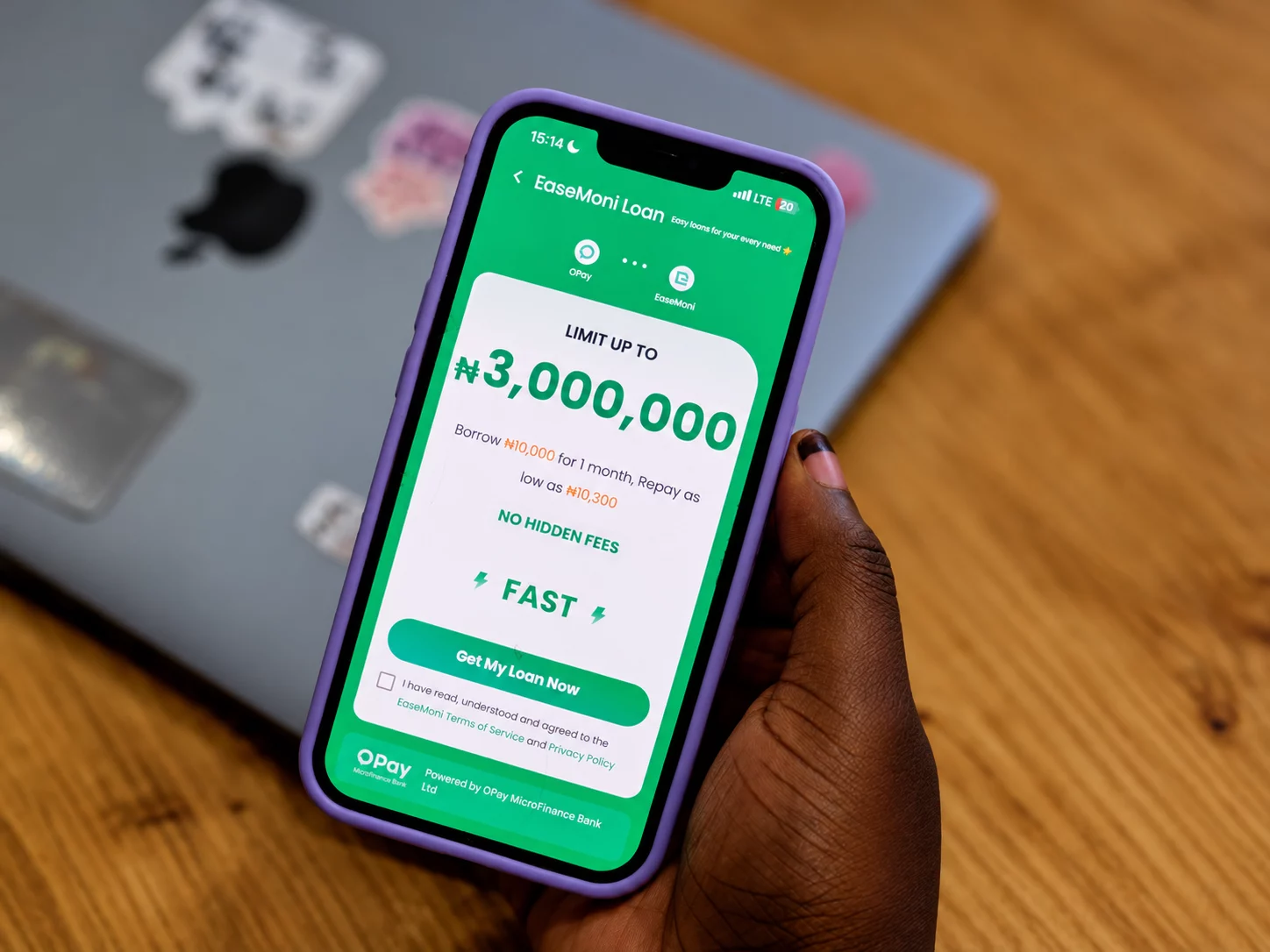
OPay's lending machine is running hot. In the first half of 2026, the Nigerian fintech originated $927.6 million in loans — more than three times what it did a year earlier — and pulled in $236.12 million in loan-financing revenue. But for every $10 it lent, it set aside $1.28 to cover expected credit losses. That single number tells you more about the economics of digital lending in Nigeria than any growth headline.
The Math Behind the Machine
Strip it down: every $10 OPay lent generated $2.55 in loan-financing revenue, a figure that includes interest and late-payment penalties. Against that, the company provisioned $1.28 for expected credit losses, leaving roughly $1.27 before funding, operating costs, taxes and everything else. Provisions consumed 50.2% of loan-financing revenue in H1 2026, up from 41.0% a year earlier. Revenue grew 167.9% year-on-year, but provisions grew 210.3%. That gap is the story: credit losses are outpacing the income meant to absorb them. OPay's loan-financing revenue equalled 25.5% of originations, just under the Central Bank of Nigeria's 26.5% benchmark rate for the period.
Why the NPL Ratio Flatters OPay
OPay reported a non-performing loan ratio of 4.3% as of June 30, 2026 — below the banking industry's 8.03% and the 5% prudential threshold. But the comparison is shaky. OPay charges off loans at 120 days past due, while Nigeria's conventional banks classify loans as losses only after 360 days. That means loans OPay writes off could sit on a bank's books for another eight months. OPay doesn't disclose the value of loans charged off between the 90-day and 120-day marks, so it's impossible to estimate what its ratio would look like under a 360-day timeline. The number looks strong, but it's measured on a shorter clock.
Merchant Loans and the Risk Bet
OPay is betting that a shift toward merchant lending will lower its credit risk over time. The logic is simple: regular business transactions give observable signals of repayment capacity, unlike the thin-file consumers who dominate its current book. The company already leans hard on data — more than 200 billion credit and financial data points, nearly 50 billion behavioural data points, and over 5,000 machine-learning models and variants to price loans and monitor delinquency. It launched BNPL in September 2025 and has disbursed $99 million in merchant loans and $5 million through BNPL. But OPay itself warns that poor data, shifting borrower behaviour, fraud and model drift can weaken predictions and increase losses.
Scale, Cash and the Cost of Growth
OPay originated $1.56 billion in loans in Nigeria in the 12 months to June 30, 2026, with quarterly unique borrowers hitting 6.7 million in Q2 2026 — more than seven times the Q1 2024 figure. Lending now accounts for 50.55% of its $467.06 million total income. It funds this from a $918.7 million pool of cash, equivalents and short-term investments, and says it had no credit facilities from financial institutions as of June 30. But growth has a price: selling and marketing expenses rose 104.67% to $78.68 million in H1 2026, and a TechCabal report in April 2026 flagged OPay, EaseMoni and OKash among major sources of complaints about harassment from digital lenders. OPay says it limits marketing contact to twice a week and offers distressed borrowers counselling, deferrals and penalty or interest waivers.
Key Takeaways
- OPay provisioned $1.28 for every $10 lent in H1 2026, leaving roughly $1.27 before operating costs and taxes.
- Provisions grew 210.3% year-on-year, faster than the 167.9% growth in loan-financing revenue.
- OPay's 4.3% NPL ratio looks better than banks' 8.03%, but its 120-day charge-off policy makes the comparison misleading.
- Merchant lending is OPay's bet to reduce credit risk, backed by heavy data and machine-learning underwriting.
- Marketing costs jumped 104.67% to $78.68 million as OPay scales lending and faces complaints over collection tactics.
Keep Reading