Tesla's Robotaxi Curfew: Musk Blames Grey Kittens, Not Sensors
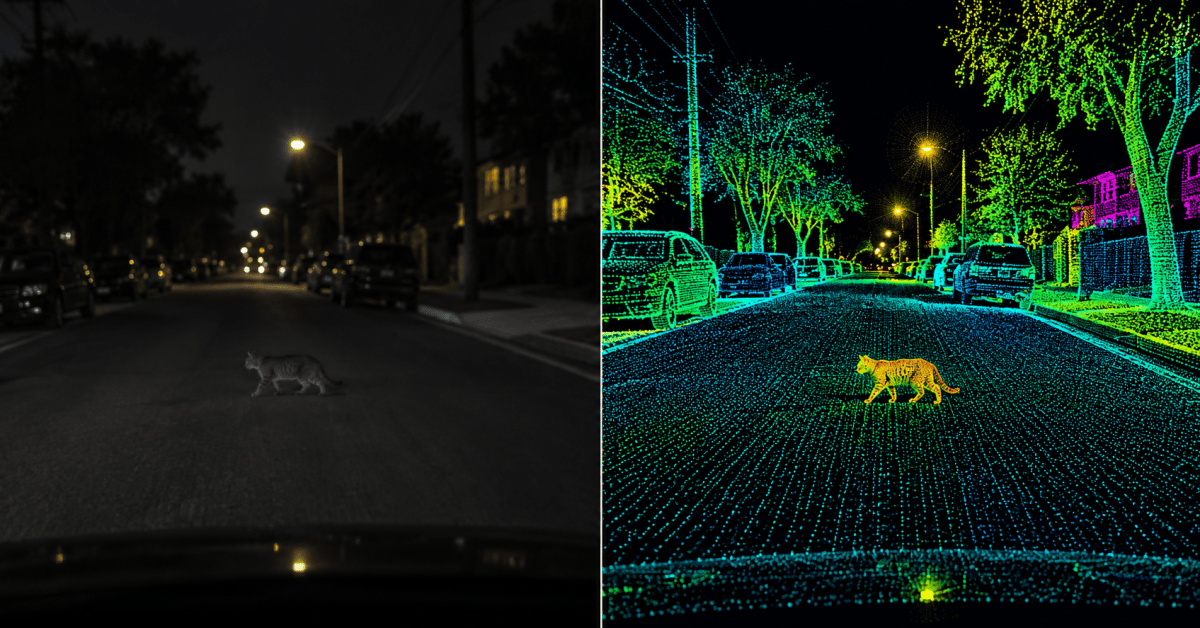
Tesla's Robotaxi service in Austin now runs until 11pm, a single-hour extension that Musk framed as a safety milestone. The reason for the curfew, he said, is avoiding pets that are hard to see at night—his example being grey kittens on grey tarmac. That is a low-light, low-contrast detection problem, and it is the textbook weakness of cameras. It is also exactly what lidar and radar are built to solve. Musk has spent years dismissing those sensors as a crutch and a fool's errand. Now the gap between that rhetoric and the service's actual limits is getting harder to ignore.
The Hour That Says More Than a Launch
When Tesla launched Robotaxi in Austin in June 2025, the app accepted rides from 6am to midnight. Fifteen months later, the service closes an hour earlier than it did on day one. Musk says the main thing Tesla is trying to solve is not running over pets when they are hard to see at night. That is a candid admission from a company that has spent a decade telling investors and customers that cameras alone would crack self-driving. The extra hour is not a breakthrough. It is a reminder of how narrow the operating window remains, and how slowly the service has scaled even after adding Cybercabs.
Why Cameras Struggle Where Lidar Doesn't
A camera is a passive sensor. It depends on light bouncing off an object and on that object standing out from its background. A grey animal on grey pavement at night offers very little of either. Lidar is active: it fires laser pulses and times their return, producing distance and a 3D shape regardless of color or ambient light. Radar does similar work with radio waves and adds speed, though it is weaker on small objects. Every company running driverless cars at scale uses all three. Waymo's sixth-generation system carries 13 cameras, 4 lidars and 6 radars, and its roughly 4,000 driverless vehicles run 24 hours a day. Tesla removed radar in 2021, dropped ultrasonic sensors in 2022, and has never shipped a car with lidar.
The Contradiction Musk Skipped
Musk's past statements make the current admission awkward. In 2019 he called lidar a fool's errand. In 2022 he called it a seductive local maximum. In 2025 he claimed lidar and radar reduce safety due to sensor contention. Yet when Tesla was pulling radar in 2021, he told Electrek that vision with high-res radar would be better than pure vision. Meanwhile, NHTSA is investigating 3.2 million Teslas over FSD crashes in low-visibility conditions, a probe in which it demanded an internal document titled Radar Saves Us. The physics of dark, low-contrast objects has not changed. What changed is that Tesla now has to explain a curfew.
What This Means for Tesla—and Everyone Else
The cost excuse for skipping lidar is fading. Rivian said this week that lidar now costs it a few hundred dollars per vehicle. Waymo, with lidar and radar on every car, never closes. Tesla is one software update away from returning to its launch-day midnight closing time, but how many one-hour updates before it admits there is a sensor for this? The same low-contrast problem applies to a tire tread on a highway or a kid in a black hoodie. Those are bigger and easier to spot, but nobody should want the safety margin to be bigger than a kitten. No sensor suite gets this to zero—a Waymo ran over a bodega cat in San Francisco last October—but Tesla is the only one whose CEO says the cars have trouble seeing the animal in the first place.
Key Takeaways
- Tesla's Austin Robotaxi now runs until 11pm, still an hour short of its June 2025 launch window.
- Musk says the blocker is spotting pets like grey kittens on grey tarmac at night—a classic camera weakness.
- Lidar and radar handle low-light, low-contrast detection; Waymo uses 13 cameras, 4 lidars and 6 radars and runs 24/7.
- Tesla removed radar in 2021 and has never shipped lidar, despite Musk once saying high-res radar plus vision would beat pure vision.
- Rivian says lidar now costs a few hundred dollars per vehicle, undercutting the cost argument against it.
Keep Reading