Europe's New Space Era: Isar Aerospace Reaches Orbit
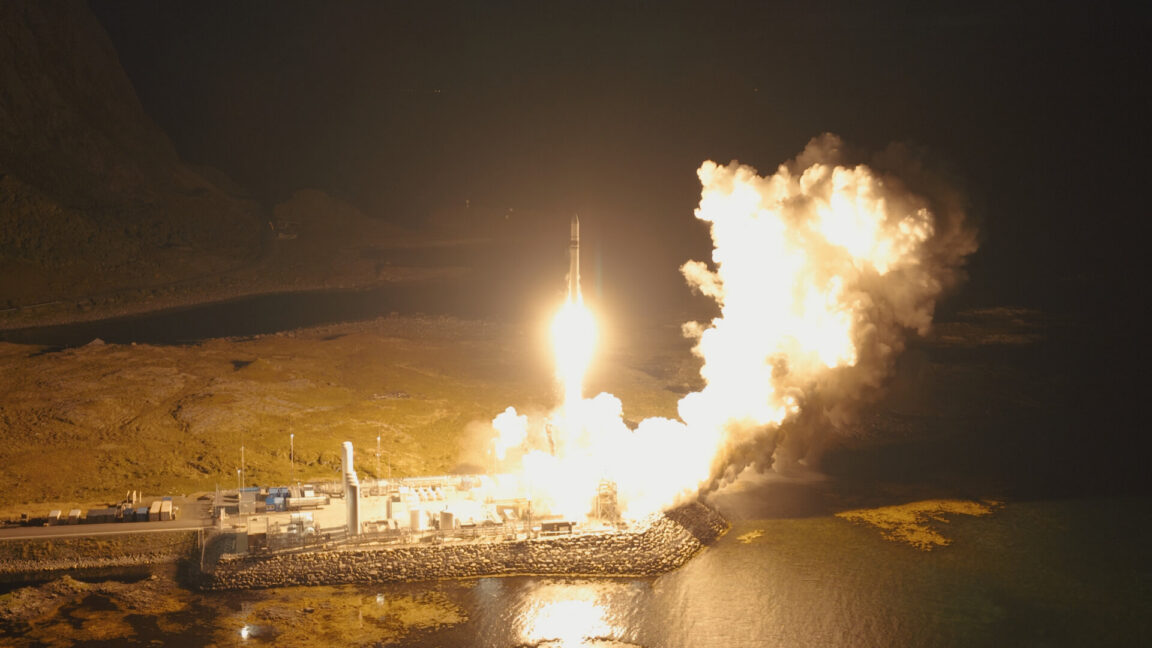
In a historic achievement, Isar Aerospace, a German startup founded in 2018, successfully launched its Spectrum rocket into low-Earth orbit from Andøya Spaceport in Norway. This marks the first fully commercial orbital launch from Europe, breaking the dominance of government-funded incumbents and signaling a new era of private spaceflight on the continent. The success not only validates Isar's technology but also underscores Europe's growing capability to secure independent access to space, a strategic imperative amid shifting geopolitical alliances.
A Milestone for European Spaceflight
Isar Aerospace's Spectrum rocket lifted off at 20:12 UTC on September 6, 2026, and reached orbit seven minutes later. The two-stage rocket, powered by nine Aquila engines in its first stage, carried five CubeSats and a technology demonstration payload. This flight followed a failed first attempt in March 2025, but the team's persistence paid off. CEO Daniel Metzler emphasized that the achievement, which took eight years, proves that Europe can innovate quickly. 'We achieved within a few years what had taken the European space industry decades before,' he said, highlighting the company's private funding model as a key differentiator.
Private Funding vs. Government Subsidies
Unlike traditional European launchers like Ariane 6 and Vega-C, which rely heavily on government subsidies, Isar Aerospace raised approximately $1 billion from private investors and has nearly 500 employees. This entrepreneurial approach, reminiscent of Silicon Valley, contrasts with Europe's legacy 'geo-return' procurement model. The success of Isar could pressure incumbents to become more competitive and reduce costs. 'Europe can also move fast and deliver,' Metzler said, emphasizing the importance of not depending on a monopoly for strategic access to space. The launch also carries geopolitical weight, as European governments seek to bolster autonomy amid strained relations with the US.
What's Next for Isar and European Launchers
Isar Aerospace plans to scale up production at its new 10-acre factory near Munich, aiming for up to 40 rockets per year. The company has five more Spectrum rockets in production and a customer pipeline that includes the European Space Agency and Astroscale. Meanwhile, competitors like Rocket Factory Augsburg and PLD Space are targeting their first orbital launches by the end of 2026. ESA's European Launcher Challenge, which awarded Isar $230 million, requires participants to achieve orbit by 2027. Isar has already cleared that hurdle, positioning itself as the leader in Europe's new space race.
Key Takeaways
- Isar Aerospace becomes the first European company to launch a fully commercial orbital rocket.
- The Spectrum rocket's success provides Europe with independent access to space, reducing reliance on non-European launch providers.
- Isar's private funding model contrasts with traditional government-subsidized European launchers, potentially driving down costs.
- The company aims to scale production to 40 rockets per year from its new Munich factory.
- ESA's European Launcher Challenge, which includes Isar, is fostering competition among European launch startups.
Source: Ars Technica • 🇺🇸 San Francisco
Keep Reading