Fruit Fly Brain Inspires AI That Never Forgets Old Scents
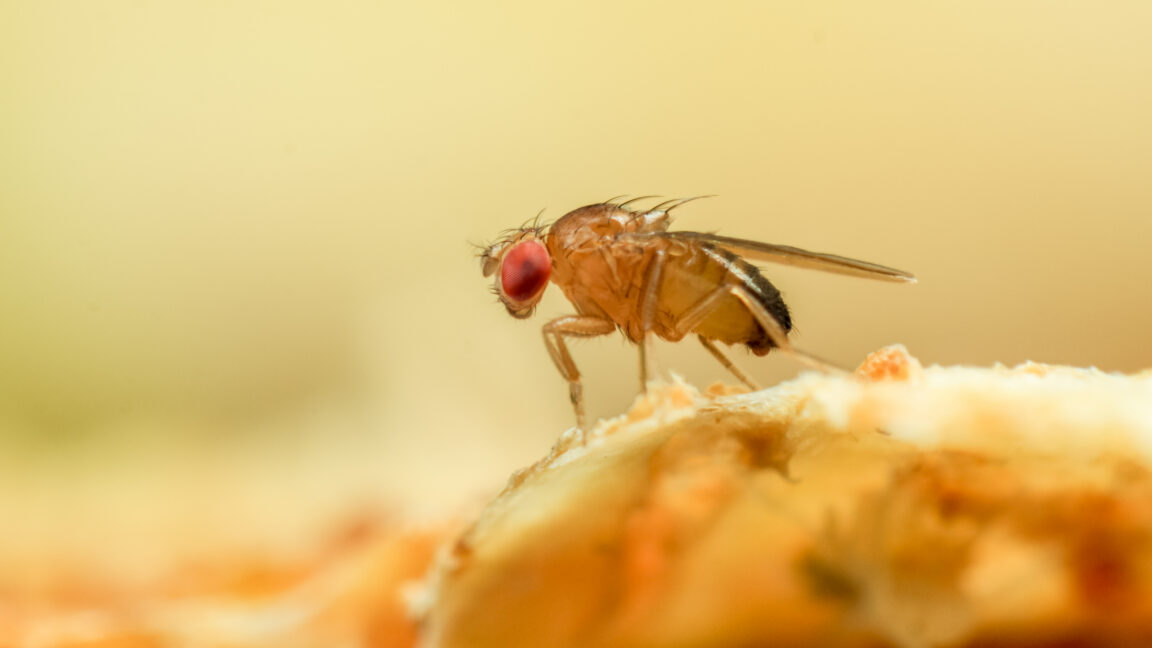
Fruit flies have tiny brains, yet they excel at distinguishing and remembering countless odors. Researchers at the Okinawa Institute of Science and Technology have taken inspiration from this biological marvel to develop Spi-Fly, a new algorithm that learns new scents rapidly without erasing previous knowledge. Published in Neuromorphic Computing and Engineering, Spi-Fly addresses two major bottlenecks in electronic noses: the need for massive labeled datasets and the problem of catastrophic forgetting. By mimicking the fly's sparse coding mechanism, Spi-Fly offers a fresh approach to machine olfaction that could lead to more adaptable and efficient odor-sensing devices.
The Problem with Current E-Noses
Electronic noses on the market, from companies like Alpha MOS and Aryballe, are expensive and narrowly specialized. They struggle to generalize across different odors and require extensive retraining when faced with a new task. Two core issues plague these systems: they need mountains of hand-labeled examples to learn, and teaching them a new odor often causes 'catastrophic forgetting'—where previously learned smells are overwritten. This makes them impractical for dynamic environments where new scents constantly appear. The fruit fly, with its 140,000 neurons, effortlessly handles a vast olfactory world, suggesting a better computational strategy.
Spi-Fly's Sparse Coding Secret
Fruit flies encode odors using sparse coding: roughly 2,000 Kenyon cells receive random inputs, and a global inhibitory neuron silences most, leaving a sparse 'barcode' for each scent. Spi-Fly replicates this by projecting sensor data onto a hidden layer with mutual inhibition, then connecting to output neurons via a simple Hebbian learning rule—no backpropagation needed. This allows Spi-Fly to learn a new odor in just three exposures, while backpropagation requires about 70. In tests, Spi-Fly retained old odors with minimal accuracy loss when learning new ones, whereas backpropagation degraded to near-random guessing.
Hardware Implications and Limitations
Spi-Fly's simplicity makes it ideal for neuromorphic chips, which process spikes and have limited memory. The algorithm degrades gracefully under memory constraints, unlike backpropagation. However, Spi-Fly has a theoretical capacity ceiling: with 100 hidden neurons and 5 active per odor, it could represent about 75 million barcodes, but noise reduces this to a couple hundred distinguishable odors. The research is purely simulation-based, using pre-recorded data, and hasn't been tested with real, mixed scents. The next step is integrating Spi-Fly into physical neuromorphic hardware being developed at TU Eindhoven and Kiel University, though no timeline is given.
Key Takeaways
- Spi-Fly learns new odors in as few as three exposures, versus ~70 for backpropagation.
- It avoids catastrophic forgetting, maintaining old scent recognition while learning new ones.
- Its sparse coding approach is memory-efficient, suitable for neuromorphic hardware.
- Current tests are simulated; real-world validation with mixed odors is still needed.
Source: Ars Technica • 🇺🇸 San Francisco
Keep Reading